Retina Care by Eye Specialist in Bopal, Ahmedabad

It is the light sensitive back curtain of an eye. It contain photoreceptor cells called rods and cones. It captures incoming light and then send those electric signals to brain through optic nerve to create images. Cones are responsible coloured light and sharp vision while rods process black and white light and this help us see in night.

Macula is a central 5 mm area of retina which is responsible for sharp cantral vision, colour vision. Macula has highest density of photoreceptor cells especially cones.
COMMON RETINAL DISORDERS

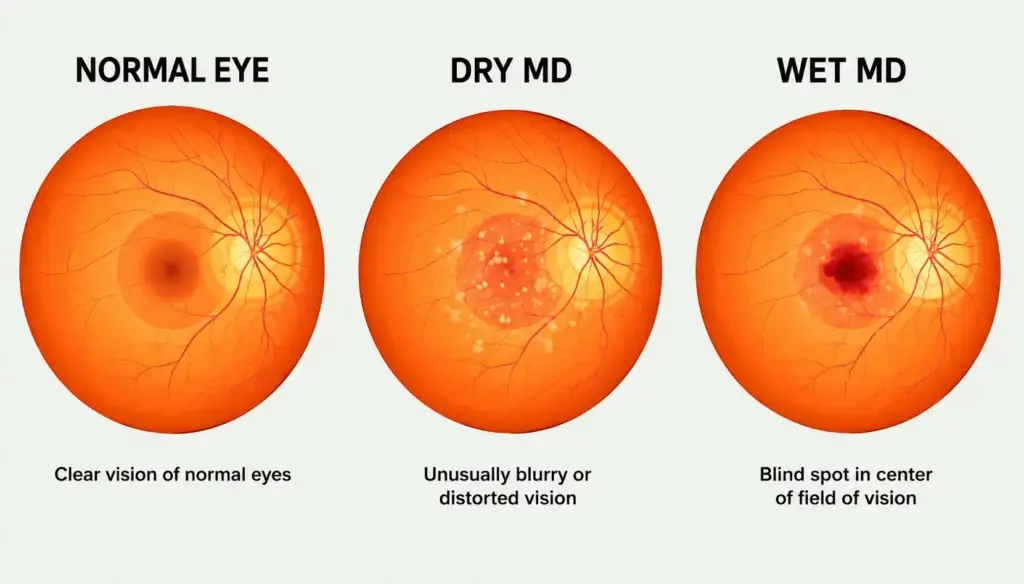
AGE RELATED MACULAR DEGENERATION

It damages macula. . It can be dry or wet. Symptoms can be blurred and distorted central vision. Dark spot in central vision.

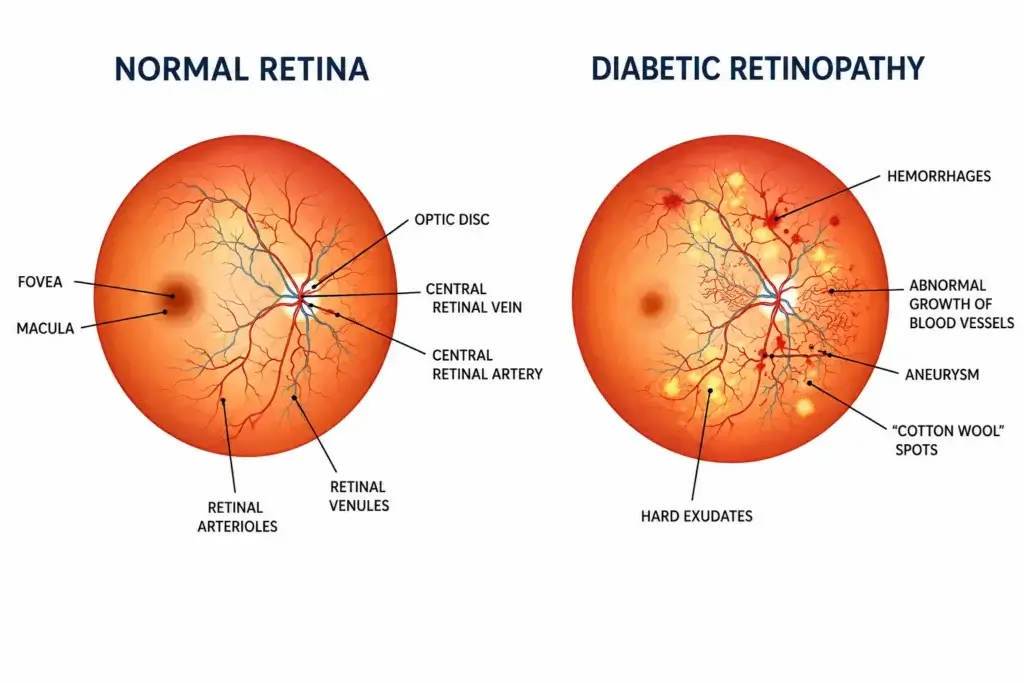
DIABETIC RETINOPTHY

Blood vessels get damaged by diabetes resulting into bleeding in retina or macular oedema . Symptoms can be blurred vision, flaters or dark spots , fluctuating vision, faded colours , vision loss in advanced stages.

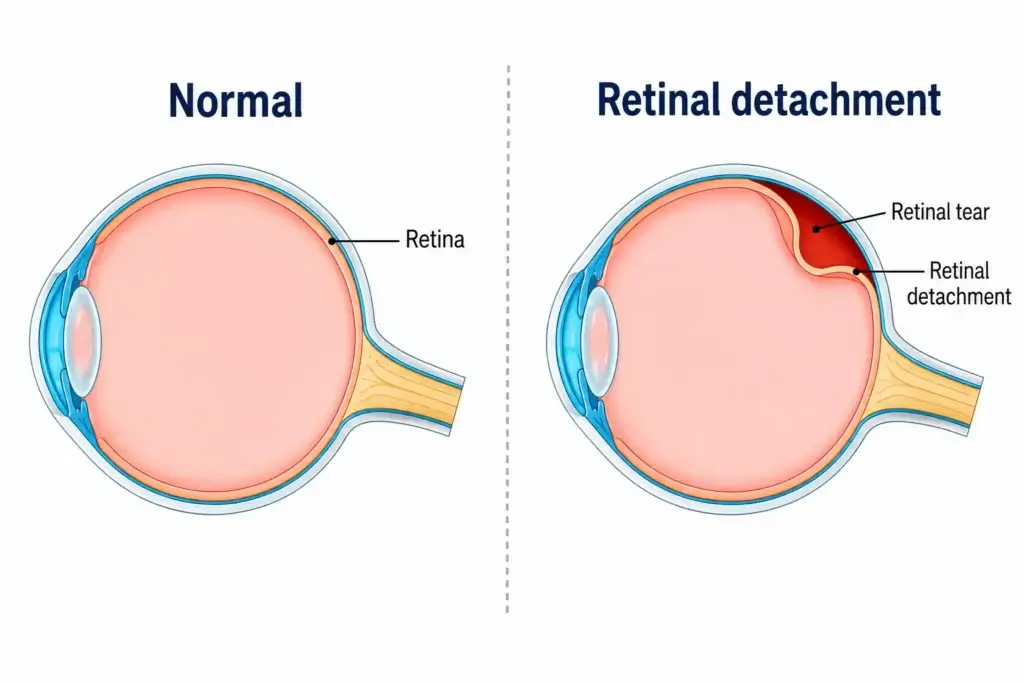
RETINAL DETACHMENT

It is an emergency condition where retina pulls away from underlying tissues. Symptoms are flashes of lights, lot of floaters, curtain or shadow in front of the eye, blurred vision. It is painless.

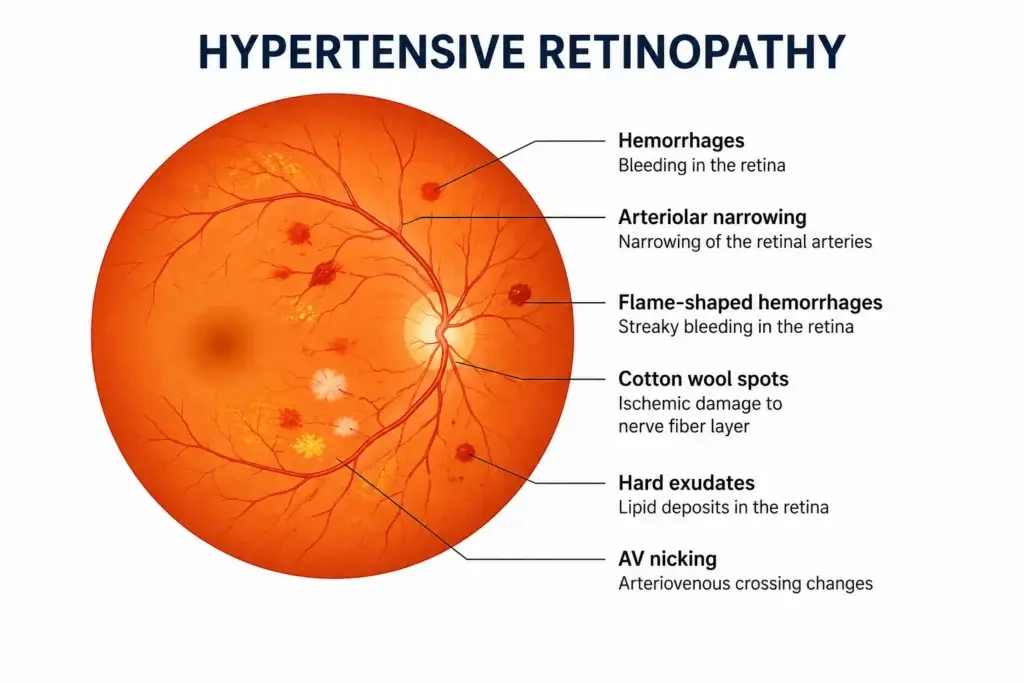
HYPERTENSIVE RETINOPATHY

Retinal blood vessels get affected. It could be asymptomatic in early stages or can get blurred vision, headaches or vision loss in advanced stages.

FAQs

Ans: if you get flashes of light, floaters, or blurry or distorted vision you should consult your doctor.
Ans: if your diabetes is well controlled there are very less chances that you will develop diabetic retinopathy however you should get your dilated retina check up done annually or as suggested by your doctor to detect early changes of diabetic retinopathy.
There are different stages of diabetic retinopthy and depending on that there are different treatments like intravitreal anti-VEGF injections, lasers and surgeries. You should consult your retina specialist if you have diabertes.
Absolutely yes. Smoking increases chances of development of age related macular degeneration.
For retina check up we need to dilate your pupils which may take 20-40 minutes .
Generally pupil returns to normal in 4-6 hours but certain people may have a slightly longer effect even upto 24 hours.
Ans: as pupil dilatation will cause lot of light sensitivity and blurred vision usually for 4-6 hours after dilatation, we advise not to drive.